Thursday, January 9, 2014
The Master Key Of Equality Is Education
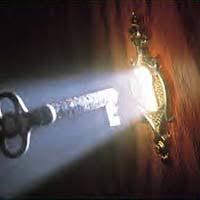
In Gwendolyn Brooks poem "We Real Cool", she addresses the problem of high school kids dropping out of school and hanging around pool halls. I cannot help but think that this a criticism of the African-American race. This poem was written in 1950 when civil rights were a huge topic among people in the United States. I believe that she is telling young Black people of that time that in order to win the battle of civil rights or equality they must stay in school and become educated. She is mocking these kids at the pool hall for dropping out of school, lurking late, thinning gin, Jazzing June and dying to soon. Brooks is also sending a message to all other school age people that education is the key to equality.

Don't Judge A Book By Its Cover
In Raymond Carver's "Cathedral" a man's wife has invited an old friend/boss of hers to stay with them for a while. We soon find out that the man (Robert) is blind. The husband has preconceived notions about the blind man. He expects the man to be wearing sun glasses, to be a non-smoker and a non-drinker. He is also unsure of how to act around Robert. He is unsure if he should turn the T.V. or help him at the dinner table. After a bit the husband and Robert are watching a television show about Cathedrals and Robert asks if the husband could describe one to him. The husband is not very good at this so Robert decides that they will draw one together. After this scene the husband has finally realized that Robert is like any other human being and connects with him. Throughout the story Robert doesn't wear sunglasses, doesn't need assistance, drinks alcohol, smokes cigarettes and marijuana. This proves all of the husbands stereotypes false. This is a great example of how people often judge those who are different, when in reality they are exactly the same as everyone else. We are all humans, man or woman, and we should be treated as such no matter what we look like or how we act.
Childhood Shenanigans
In Yasunari Kawabata's "The Grasshopper and the Bell Cricket" children are scouring the hillside looking for insects in the evening light. The children use lanterns as a light source in order to locate the insects. On the first night there is only one boy searching on the hillside. His lantern was bought and shines the color red. As the nights go on more children arrive on the hillside. There is one difference between them and the first boy. These children have hand made their lanterns out of household goods. The boy with the store bought lantern feels out of place because his lantern is not the same as everyone else's. He then throws his lantern away and makes a homemade one like the rest of the children. I feel like this is a common experience for children and possibly adults. I think everyone has experienced a time when they had a toy or object that was not like everyone else's. In order to combat this we get rid of our toy and get one like all the other children; that is if our parents allow us to do so. This part of the story is very relatable to real life.
Punctuation. Who Needs It?
I believe it was the first day of the term that the class had some debate over where to place certain punctuations in a poem that we had written on the board. Throughout this debate I could not help but think that it does not really matter where a comma or period is placed. I believe that the lack of punctuation allows the reader to have more play with the words and sentences in a work; especially, when it comes to poetry. It allows the opportunity for the reader to have multiple interpretations of a work. With punctuation the reader can only read that work in way and what fun is that? An Example is the following:
 There is obviously two meanings to the circled portion of the cover; however, if the "correct" punctuation was used there would only be one reading of it. I believe that the lack of punctuation in creative writing, especially poetry, adds humor and more excitement to the reading.
http://cybertext.wordpress.com/2012/11/22/a-light-hearted-look-at-how-punctuation-can-change-meaning/
http://cybertext.wordpress.com/2012/11/22/a-light-hearted-look-at-how-punctuation-can-change-meaning/
Tuesday, January 7, 2014
Marriage, Is It A Funeral?
One of the poems that were discussed in class today was Emily Dickinson's, " Because I could not stop for Death". We had mentioned that the poem could possibly be a metaphor for marriage. I believe this to be true due to the second stanza. It reads "We slowly drove- He knew no haste/ And I had put away/ My labor and my leisure too,/ For his Civility". This does not explain the use of "Death" in the title and first line. Some may believe that the poem describes a woman being taken away in a "carriage" and getting married. Her life then flashes before her eyes and before she knows it she is dead. I take it another way. Instead of her actually dying I believe that her life is dead once she is married. Men often times joke to each other saying that once you are married the fun ends and because of this marriage is a funeral. Maybe, this is why most grooms wear black Tuxedos; to signify the death of their bachelor life. I believe that this what Dickinson is writing about, except it is about a woman not a man. Many women's lives change after marriage. They cook, clean and care for their new husbands. They also begin to have and raise children. Just as men's lives change after marriage, women's also change. This is something that I did really think about until I read this poem.
Subscribe to:
Posts (Atom)